Kata
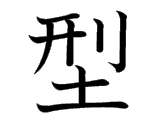
Kata (which translates to “form”) is the bedrock of traditional karate, serving as a choreographed pattern of martial arts movements practiced solo. These structured routines simulate a fight against multiple imaginary opponents, with every punch, kick, block, and step meticulously arranged. Rather than just a series of physical exercises, kata is a living library of a style’s defensive and offensive techniques, preserving the wisdom and strategies of martial arts masters passed down through generations.
The true magic of kata lies in its hidden depth, known as bunkai (the analysis and practical application of the movements). On the surface, a movement might look like a simple block, but through bunkai, it can be revealed as a joint lock, a throw, or a vital strike. Practicing kata trains the body in muscle memory, balance, proper breathing, and structural alignment, ensuring that powerful techniques become second nature to the karateka (practitioner) without the need for conscious thought during a chaotic altercation.
Beyond the physical conditioning, kata is deeply meditative, often described as “moving zen.” It demands absolute concentration, forcing the practitioner to harmonise their mind, body, and breath while executing movements with precise rhythm and intensity. In many traditional dojos, mastery of kata is considered the highest expression of karate, transitioning the practice from a mere combat sport into a lifelong art form dedicated to self-refinement and discipline.
The following kata are studied by Koshinkai Karatedo practitioners as part of their grading requirements.
- Naihanchin Sho
- Hakkyokuken
- Nijushiho
- Bassai
- Seisan
- Naihanchin
- Sanchin
- Kusanku Sho
- Sankakutobi
- Chinto
- Sochin
- Kusanku Dai
While not considered a part of the standard syllabus, these kata are also studied at seminars and training camps.
- Ananku
- Aragaki Seisan
- Chinto Dai
- Hakutsuru
- Happiken
- Happoate no Kusanku
- Koryu Naihanchin (Koshiki Naihanchin)
- Naihanchin Dai
- Naihanchin Yon
- Pinan Shodan
- Pinan Yondan
- Rohai
- Sankakutobi Dai
- Seiyunchin
- Shorinken (Kenkoken Shorin)
- Wanduan
- Yara Kusanku